
The HIV/AIDS epidemic has changed dramatically since ADAC first opened its doors. According to UNAIDS, globally, 40.8 million people were living with HIV in 2024 while 1.3 million acquired the virus and 630 000 died of AIDS-related illnesses that same year—more than one death every minute.
Africa remains the epicenter of the AIDS epidemic. More than 26 million people live with HIV on the continent—over 21 million in Eastern & Southern Africa, 5.2 million in West & Central Africa and about 240 000 in North Africa.
That equals roughly two-thirds of the global total of 40.8 million. In 2024 alone, Africa recorded ≈673 000 new infections and ≈387 000 AIDS-related deaths. While new infections in sub-Saharan Africa are 56 % lower than in 2010, progress is uneven and fragile.
In the Democratic Republic of Congo (DRC), progress is real but fragile: about 520 000 Congolese are living with HIV, adult prevalence holds at 0.7 %, and roughly 11 000 people still lose their lives each year.
The Situation at a Glance
- Disproportionate impact on women: Women and girls account for 63 % of new infections in sub-Saharan Africa, and 3 300 adolescent girls become infected every week.
- Key-population risk: HIV prevalence among female sex workers in Eastern & Southern Africa is ≈36 %, and the risk of infection is nine times higher for sex workers and 23 times higher for men who have sex with men than for the general adult population.
- Gains worth guarding: Treatment coverage has risen to 84 % in Eastern & Southern Africa and 76 % in West & Central Africa, keeping millions alive and virally suppressed.
- Regional contrasts: West & Central Africa cut new infections by 46 % between 2010 and 2023, yet still struggles with late diagnosis and treatment gaps.
ADAC’s Programme Objectives
- Reduce New Infections: Peer outreach, condom distribution, PrEP referral and mother-to-child-transmission (PMTCT) services reach youth, sex workers, MSM and remote farming families.
- Universal Testing & Treatment: Partner health centres provide confidential HIV screening; trained case navigators immediately link anyone who tests positive to nearby treatment services and follow up to support long-term adherence.
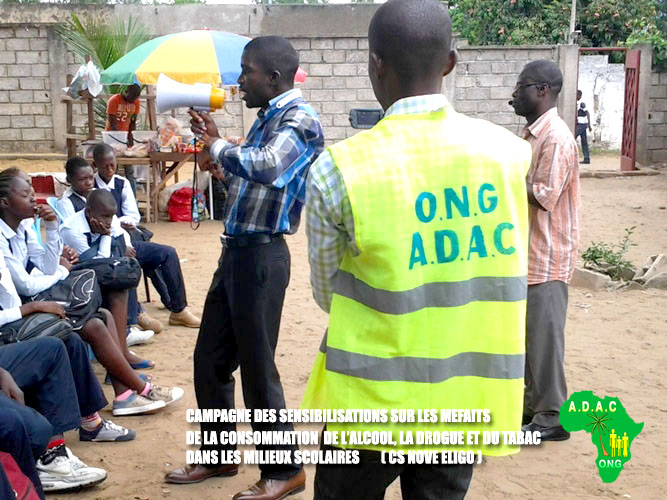
- Empowered Adolescents & Young Adults: School clubs and sports leagues build life-skills that delay sexual debut and reduce alcohol or drug-related risk-taking.
- Gender-Responsive Care: Safe spaces for women and girls combine sexual-health counselling with economic-empowerment classes.
How We Work
| Step | What We Do | Why It Matters |
|---|---|---|
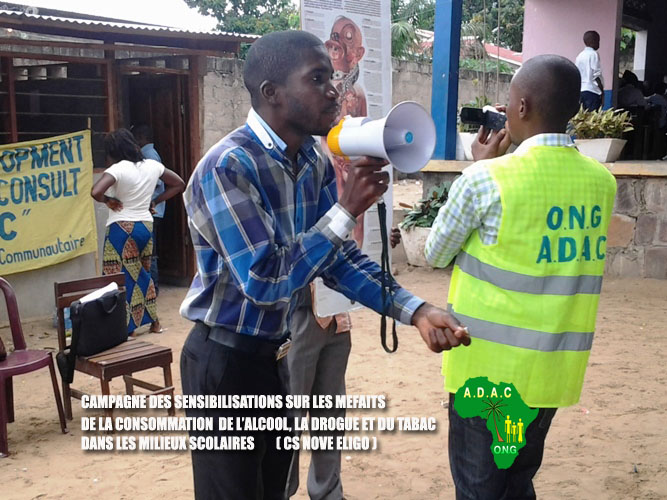
| Community Mapping | Identify local hotspots and co-design micro-plans with leaders and key-population peers. | Aligns services with cultural realities. |
| Integrated Outreach | Offer HIV testing, STI screening, family-planning advice and TB checks in one visit. | Cuts stigma and travel costs. |
| Rapid Start & Differentiated Care | Begin ART within 48 h; give multi-month refills through village depots. | Keeps clients engaged and virally suppressed. |
| Adherence & Psychosocial Support | Phone reminders, peer circles and home visits. | Maintains high viral-suppression rates. |
| Advocacy & Policy Partnership | Align with UNAIDS 95-95-95 targets and push for laws that end discrimination. | Enables us to provide assistance in line with international standards. |
The Road Ahead
Africa has proved that determined, community-centred action works. According to UNAIDS, male-circumcision campaigns alone have averted an estimated 670 000 infections in 15 priority countries. Yet a widening funding gap and hostile legal climates threaten these gains. With your partnership, ADAC will expand proven solutions—PrEP, PMTCT, youth leadership, economic empowerment—to ensure no one is left behind on the path to ending AIDS by 2030.